Attribute Permissions
Introduction
In the object attributes configuration, you can define if a field is shown and if the input in the field is mandatory for different screens and roles/permissions.
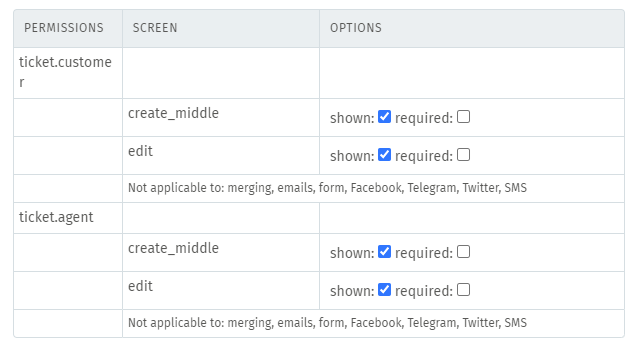
Some of the possible permissions and screen options for a user object attribute.
Based on the object context (ticket, agent, organization, user), the selectable roles (to be precise: the required permissions) and screens differ. Be aware that these settings aren’t affecting data creation via other channels than the UI. If you want further customization, have a look at Zammad’s core workflows.
Screens
In the table below you can find an overview about the different permissions and the available screens Zammad distinguishes between.
Screen |
Available for |
Description |
|---|---|---|
create |
|
Creation dialog for not yet existing data |
create_middle |
|
Ticket create dialog (middle section) |
edit |
|
Editing dialog for already existing data |
view |
|
View-only dialog for already existing data (e.g. user or organization from search) |
signup |
ticket.customer |
Sign-up screen for new customers |
invite_customer |
|
Customer invitation screen (from First Steps area) |
invite_agent |
admin.user |
Agent invitation screen (from First Steps area) |
Screen Options
For the different screens you can select “show” and “required” options.
shown: Show (check) or hide (uncheck) a field.
required: Set a field to mandatory (check). Forces users (via UI and API) to populate the field.